


Tanker Traffic Through Strait of Hormuz Falls 90%
Tanker traffic through the Strait of Hormuz has fallen 90 percent following attacks involving Iran, forcing oil shipments toward longer and more costly routes.
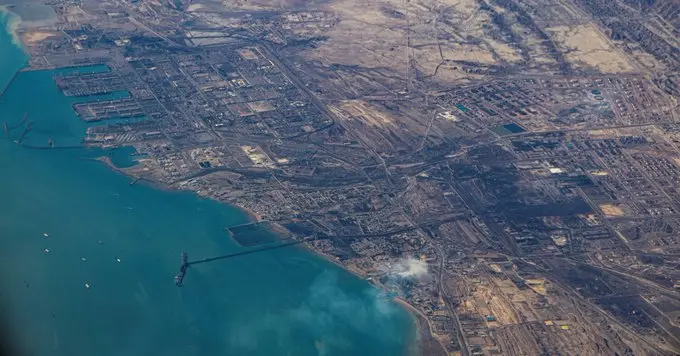
Oil tanker traffic through the Strait of Hormuz has sharply declined amid escalating regional tensions affecting global energy shipments.
March 4, 2026 Hour: 8:00 pm
🔗 Comparte este artículo
Attacks and war risk insurance cancellations disrupt a key global oil shipping corridor.
Oil tanker traffic through the Strait of Hormuz has dropped by 90 percent following attacks by the United States and Israel against Iran, according to maritime tracking data, disrupting one of the world’s most critical energy transit routes.
RELATED:
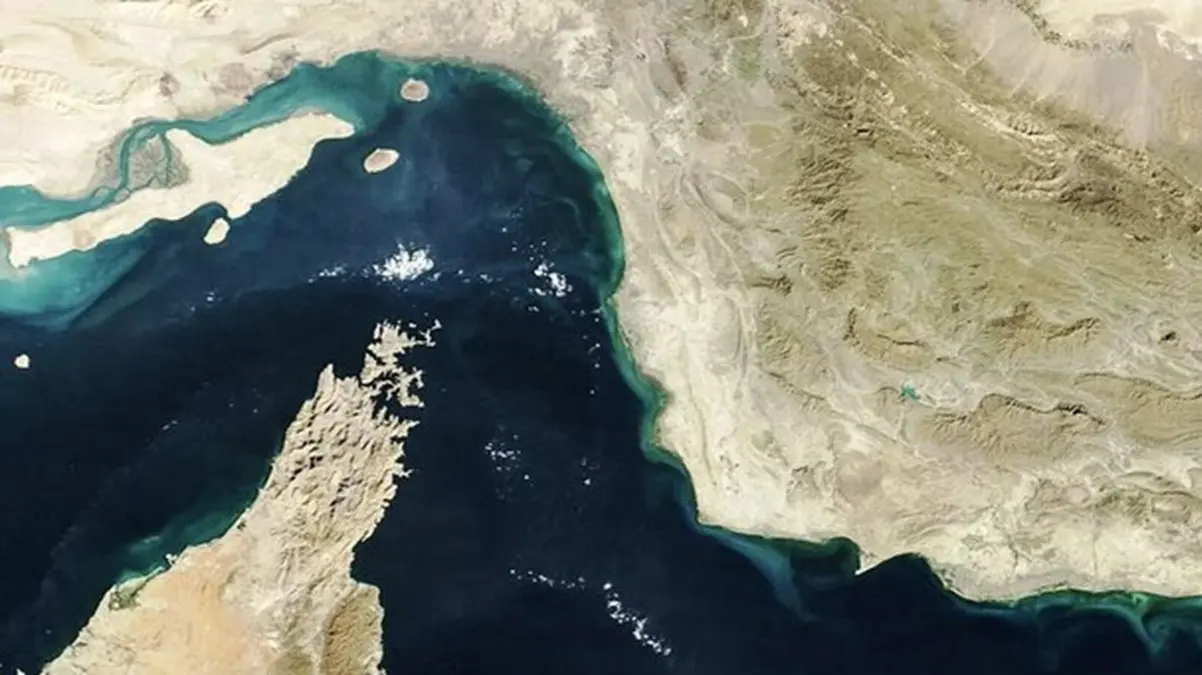
Information published by the maritime monitoring platform MarineTraffic indicates that tanker movements in the strategic waterway have sharply declined since the strikes on Tehran began. The Strait of Hormuz, located between Iran and Oman, is a vital artery for global oil trade.
According to shipping analytics firm Kpler, the decline reflects mounting uncertainty and security risks in the region. Matt Wright, Kpler’s lead freight analyst, said that, “unlike other vessel segments, where traffic has largely stopped, some tankers continue sailing east to west through the strait, and several voyages are conducted without AIS [Automatic Identification System].”
The near-total disruption follows attacks on vessels in the area as Iran responded to strikes by the United States and Israel. The Islamic Revolutionary Guard Corps also announced that the passage was considered “closed,” further heightening uncertainty for shipping companies and oil producers.
The situation has been compounded by maritime insurers withdrawing war risk coverage for dozens of shipping operators. The loss of insurance has effectively halted navigation through the corridor between Iran and Oman, forcing companies to search for safer routes.
Under normal conditions, roughly 20 million barrels of oil pass through the Strait of Hormuz each day, representing about one fifth of global oil consumption, estimated at around 100 million barrels per day.
Analysts say available alternatives are limited. Baird Langenbrunner, an analyst at Global Energy Monitor, identified two pipelines that could partially mitigate the disruption. The first is Saudi Arabia’s East–West pipeline, which has a capacity of five million barrels per day and connects the Abqaiq processing center in the Persian Gulf with the Red Sea port of Yanbu, allowing exports without crossing the Strait of Hormuz.
However, Langenbrunner warned that Yanbu “was not designed to be Saudi Arabia’s primary export hub,” meaning infrastructure constraints could limit the actual export capacity. A parallel pipeline network could be temporarily adapted to increase throughput to seven million barrels per day, although this would require sharing capacity with other strategic liquids transported through the system.
Another option is the Habshan–Fujairah pipeline in the United Arab Emirates, which can carry up to 1.8 million barrels per day to the Gulf of Oman. Yet it already functions as a regular route to avoid insurance costs associated with Hormuz, leaving little room for additional volumes.
Iran’s Goreh–Jask pipeline, built to bypass the strait, could theoretically provide another alternative, but its capacity is about 300,000 barrels per day and its infrastructure faces sanctions and security risks.
Even combined, these alternatives would only absorb a fraction of the oil that normally flows through the Strait of Hormuz.
Saudi Arabia has already outlined plans to expand the use of the Abqaiq–Yanbu corridor to ship crude through the Red Sea and onward to Europe via the Suez Canal or the Bab al-Mandeb Strait near Yemen.
Companies without access to large pipeline networks face more expensive options, including rerouting shipments around Africa via the Cape of Good Hope, which adds several days of navigation and significant additional costs.
The disruption is also affecting global shipping beyond oil. Danish shipping company Maersk has suspended new bookings in the Persian Gulf “until further notice,” reflecting wider concerns within the logistics sector.
European countries are also seeking alternative energy suppliers to reduce the risk of shortages. Norway and the United Kingdom could increase shipments from the North Sea, while West African producers such as Nigeria and Angola offer Atlantic routes that avoid Middle Eastern maritime chokepoints.
North African producers including Algeria and Libya could supply southern Europe through shorter routes, although political instability—particularly in Libya—adds further uncertainty.
Latin America may also become more relevant in global supply diversification. Brazil and Guyana can export crude to Europe through Atlantic routes that bypass Middle Eastern transit corridors entirely.
Pauline Heinrichs, professor of War Studies at King’s College London, told Reuters that the crisis highlights structural vulnerabilities in global energy systems. She said that, “Our security strategy is currently reduced to responding to crises induced by fossil fuels.”
According to Heinrichs, continued dependence on fossil energy exposes major economies to geopolitical shocks that transform strategic maritime passages into arenas of economic confrontation.
Author: MK
Source: Agencies